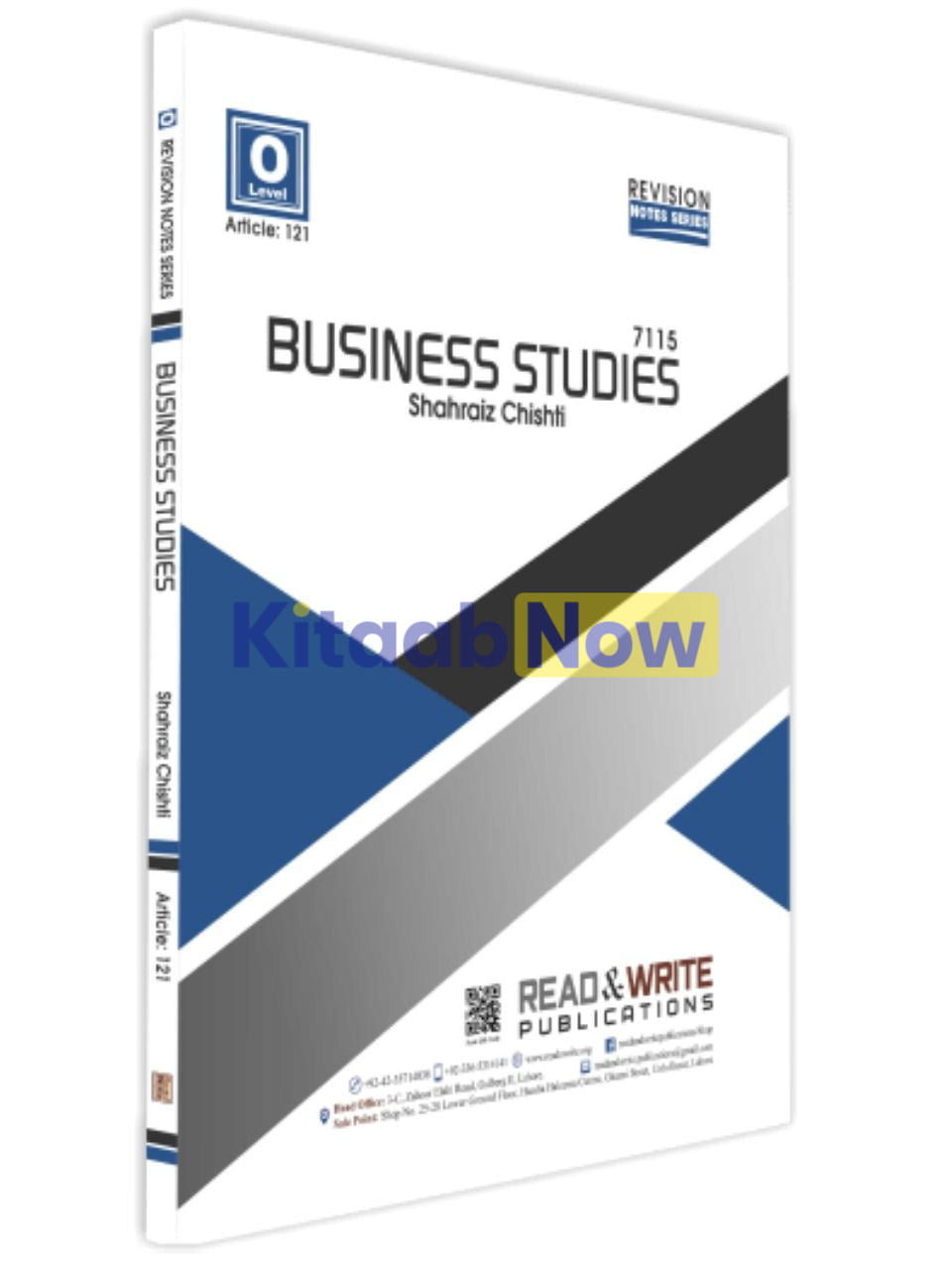
121 Business Studies O Level (Revision Notes) by Shahraiz Chishti
$ 3.07
Description121 Business Studies O Level (Revision Notes) by Shahraiz Chishti by Shahraiz ChishtiBusiness Studies O Level Notes written for students of Code 0450 IGCSE/ O levels Code 7115 Business Studies. The book covers the whole syllabus and is written in a concise manner.The book can be used as a primary text for covering the syllabus and at the same time can be used as revision text as it is written in a concise manner.The language used is simplistic so that students of all backgrounds/language ability can engage with the content of the book. Exam questions are not present in this book so it is highly suggested that students solve Past Papers to understand the paper pattern.The Author Mr Shahraiz Javed Chishti completed his MBA/BBA in Marketing and media with minor in social sciences from LSE and did his O levels from Aitchison College Lahore. The author has been a renowned teacher of O/A Levels Business, Commerce and Social Sciences.Key FeaturesSufficient for excelling at both Paper 1 and Paper 2Complete course outline, paper pattern with concerned percentagesConcise yet comprehensive enough to be used as a quick revision guideImportant topics discussed in greater detail to cater syllabus 7115 for O level and requirementsTable of ContentsAcknowledgementsSyllabusPaper PatternChapter 1 & 2 Business Activity and Types of BusinessesNeedsWantsFactors of productionsThe economic problemOpportunity costSpecializationGoodsPrivate sector activitiesPublic ownershipPrivatizationChapter 3 Enterprise, Business Growth and SalesEnterprise and Entrepreneurship EntrepreneurCharacteristic of successful entrepreneursWhy should governments support business startupsValue of salesWhich method should you choose?Chapter 4 Types of Business OrganizationsPrivate SectorPartnershipPrivate Limited CompaniesPublic Limited CompaniesCo-operativesClose CorporationsJoint venturesFranchisingPublic SectorMunicipal enterprisesChapter 5 Business Objectives and Stakeholders ObjectivesBusiness objectivesStakeholder GroupsChapter 6 Motivation TheoriesMotivationMotivation TheoriesMaslowHerzbergMcGregorWhy do people work?WagesMotivating factors – non-financial motivatorsJob satisfactionJob rotationJob enlargementJob enrichmentAutonomous work groups or team-workingLeadershipFormal and informal groupsFormal groups in businessInformal groups in businessChapter 7 Organizational StructureDelegationFunctional departmentsDecentralisationRole of ManagersTrade UnionsChapter 8 Recruitment, Training and Human ResourcesRecruitment and selectionJob Analysis and DescriptionJob specificationAdvertising the vacancyInternal recruitmentExternal recruitmentJob advertisementApplications forms and CVs/résumésInterviewsRejecting unsuccessful applicantsWorkforce planningDismissal and RedundancyChapter 9 Communication in BusinessFormal CommunicationInformal CommunicationMethodsMotivation and CommunicationEffective communicationBarriers to Successful CommunicationHow to Improve CommunicationGrapevineDirection of communicationChapter 10 MarketingWhat is marketing?Product-orientated and market-orientated businessesWhat is marketingThe Marketing departmentThe objectives of marketingSWOT analysisMarket segmentsThe marketing mixFour C’sChapter 11 Market ResearchWhy is market research needed?Primary researchChapter 12 Marketing Mix ProductProductTypes and classificationDevelopment phaseChapter 13 Pricing StrategiesPrice Elasticity of DemandCost-plus Pricing StrategyChapter 14 PromotionsPromotionLegal and other constraintsInternetChapter 15 PlaceChannel of DistributionAgentsRetailerChapter 16 Marketing StrategyLegal constraints on marketingChapter 17 ProductionOperations departmentStock control and inventory controlLean Production TechniquesKaienTechnology in BusinessChapter 18 Break Even and Business CostsCostsBreak Even AnalysisChapter 19 QualityWhat is qualityQuality ControlQuality AssuranceTQM (Total quality management)Chapter 20 Factors Affecting LocationFactors affecting the location of a manufacturing businessFactors affecting the location of a retailing businessFactors that influence a business to relocate either at home or abroadFactors affecting the location of a service sector businessRoles of legal controlChapter 21 Financing ActivitiesWorking CapitalExternal Sources of FinanceOther Sources of FinanceFactors Influencing Choices of FinanceChapter 22 Cash FlowCash Flow StatementLimitations of Cash FlowCauses of Cash-Flow ProblemsIncrease cash inflowsChapter 23 & 24 Income Statement and Balance SheetIncome StatementAssetsTrade Receivables (Debtors)Accounts/Trade Payable (Creditors)GoodwillChapter 25 Ratio AnalysisProfitabilityLiquidityChapter 26 Government and Economic Influences on BusinessGovernment economic objectivesLow inflationLow levels of unemploymentEconomic growthBalance of paymentsFiscal PolicyMonetary policyChapter 27 Environment and EthicsExternalitiesChapter 28 Business in the International EconomyGlobalizationPoints for globalizationMultinational companyReferences