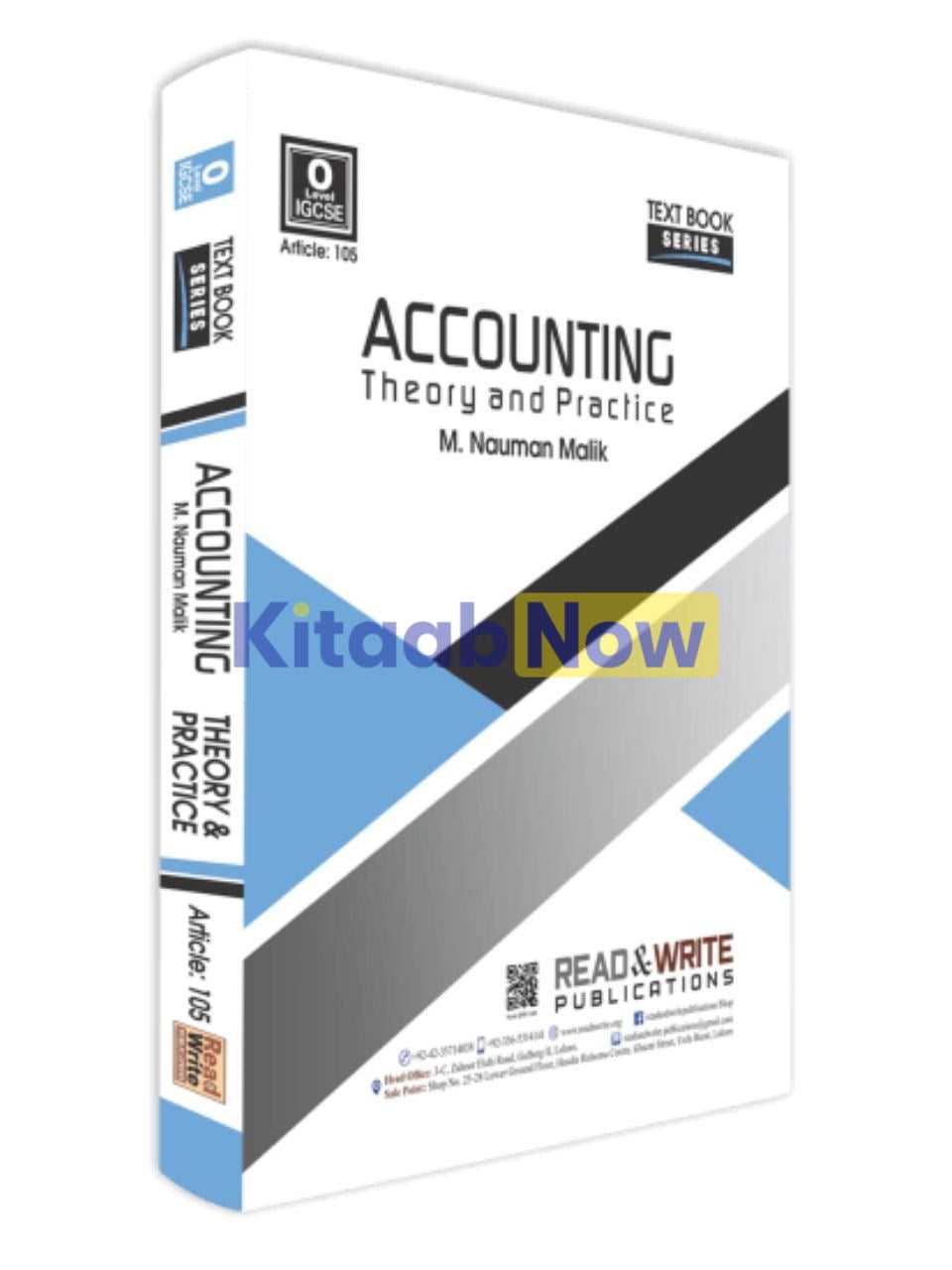
105 Accounting O Level IGCSE (Theory and Practice)
$ 5.66
Description105 Accounting O Level IGCSE (Theory and Practice) by Muhammad Nauman MalikTable of ContentsPrefaceChapter 1 Bookkeeping and AccountingBranches of AccountingAccounting EquationAssets 14Liabilities 14Equity 14Drawings 14The Entity Concept and for Accounting Equation 14The Dual Aspect Concept and for Accounting Equation 15TransactionCash Transactions 15Credit Transactions 15Statement of Financial Position (Statement of Financial Position)Statement of Financial Position (Horizontal Style) 17Statement of Financial Position (Vertical Style) 17Review QuestionsChapter 2 Accounting for Assets, Liabilities and CapitalEvolution of Book KeepingRules of Debit and CreditLedgerAccount“T” Account 23Three Column Ledger Account (Running Balance Method) 24Double-Entry Relating to Assets and LiabilitiesExample 24Balancing of An AccountWhen Should Accounts be Balanced? 28Trial BalanceUses of a Trial Balance 29Why Is It Necessary for a Trial Balance to ‘Balance’? 29Trial Balance – An Aid to Financial Statements 29Review QuestionsChapter 3 Accounting for InventoriesInventory of GoodsBookkeeping for Inventory of GoodsWhy Inventory Account Does Not Include Purchases and Sales of GoodsPurchasesCash Purchases 34Credit Purchases 34SalesCash Sales 34Credit Sales 35Purchases Returns (RETURN Outwards)Sales Returns (RETURNS Inwards)Trading Section of Income StatementClosing of Incomes and ExpensesClosing InventoryOpening InventoryReview QuestionsChapter 4 Accounting for Incomes and Expenses 43IncomesExpensesDouble-Entry for Expenses and Incomes (REVENUES)Bookkeeping for Incomes and ExpensesCalculation of Net ProfitClosing of Incomes and ExpensesService BusinessesDifference Between Trading and Service Businesses 46Review QuestionsChapter 5 Financial Statements-An IntroductionNeed for Income StatementUses of Income StatementCarriage InwardsCarriage OutwardsIncome Statement and Statement of Financial Position-An Important ConsiderationAccounting PeriodDrawingsAssetsNon-Current Assets 51Current Assets 51LiabilitiesCurrent Liabilities 51Non-Current Liabilities 51Review QuestionsChapter 6 Books of Original Entry & Division of LedgerAdvantages of Maintaining Books of Original EntryComponents of Books of Original EntrySales JournalPosting from for Sales Journal to for Ledger 62Trade Discount 62Sales on Credit Card 63Purchases JournalPosting from for Purchases Journal to for Ledger 63Return Inwards JournalPosting from for Returns Inwards Journal to for Ledger 64Return Outwards JournalPosting from for Returns Outwards Journal to for Ledger 65General JournalCash BookTwo Column Cash Book 67Three Column Cash Book 67Personal LedgersCash BookGeneral LedgerReview QuestionsChapter 7 Cash BookTwo Column Cash BookFolio ColumnsDishonoured ChequesContra EntriesBalancing of Cash and Bank ColumnsTrade DiscountCash DiscountsThree Column Cash BookNature of Discounts ColumnsCash Book in Recent TimesPetty Cash BookImprest SystemAdvantages 79Review QuestionsChapter 8 Bank Reconciliation StatementsDifference Between Bank Statement and Cash BookReasons for Difference Between Cash Book and Bank Statement BalanceItems in for Bank Statement But Not in for Cash Book 86Items in for Cash Book But Not in for Bank Statement 87Bank Reconciliation StatementSteps for Preparing a Bank Reconciliation StatementUses of Bank Reconciliation StatementReview QuestionsChapter 9 Capital and RevenueTreatment of Capital and Revenue Items in Financial StatementDistinction Between Capital and Revenue ExpendituresExpenditures for Acquisition of a Non-Current Asset 99Expenditures for Improving Efficiency /Capacity of a Non-Current Asset 99Expenditure At for Initiation of Business 100Expenditure on Extension of Business 100Expenditures to Increase for Useful Life of An Asset 100Expenditures of Abnormal Amounts 100Application of Materiality ConceptDifference Between Capital and Revenue ReceiptsRevenue Receipts 100Capital Receipts 100Effects of Wrong Treatment of Capital and Revenue ItemsReview QuestionsChapter 10 Accounting for Non-Current AssetDepreciationAmortization and Depletion 106Effects on Cash FlowsRelationship With Market ValueCauses for DepreciationFactors for Calculating DepreciationThe Original Cost of Asset 107The Estimated Useful Life 107The Approximate Residual Value 107Characteristics of DepreciationWhy Depreciation Is Charged?Methods for Calculating DepreciationRevaluation Method 108Straight Line Method or Original Cost Method 108Reducing Balance Method 109Annual Depreciation Under Reducing Balance & Straight Line MethodsDistinctive Features of Straight Line and Reducing Balance MethodChoice of a MethodDifference Between Depreciation and Provision for DepreciationDepreciation PoliciesDepreciation AccountingDepreciation and Accounting ConceptsReview QuestionsChapter 11 Bad Debts and Provision for Doubtful DebtsBad DebtsBad Debts RecoveryDoubtful DebtsProvision for Doubtful DebtsGeneral Provision for Doubtful Debts 121Specific Provision for Doubtful Debts 121Calculation of Provision for Doubtful Debts 121Treatment of Provision in Financial Statements 121General Journal Entries 122Ageing ScheduleBad Debts RecoveryCash Discounts Allowed and Provision for Discounts AllowedWhy Cash Discounts Are Offered? 124Why Provisions Are Made for Doubtful Debts and Discounts AllowedSalient Points to NoteReview QuestionsChapter 12 Control AccountsControl Accounts in Cambridge Ordinary Level SyllabusThe Format of Control AccountsHow Control Accounts Are Prepared?Contra EntryTwo Balances of Control AccountsReasons for Having Two Balances of a Control Account 133Treatment of Two Balances in for Statement of Financial Position 133Advantages or Uses of Control AccountsReview QuestionsChapter 13 Correction of Errors and Suspense AccountTypes of ErrorsErrors Not Affecting Agreement of Trial Balance 143Errors Affecting Agreement of Trial Balance 145Suspense AccountEffect on Profit of Correcting ErrorsEffects on Statement of Financial Position of Correcting ErrorsReview QuestionsChapter 14 Inventory ValuationBasis for Inventory ValuationCostNet Realisable ValueDifference Between Cost & Net Realisable ValueBasis for Inventory ValuationWhy Inventory Valued At Lower of Cost & NRVInventory Valuation and Accounting PrinciplesSeparate Valuation of Inventory ItemsEffects of Errors in Valuing InventoryReview QuestionsChapter 15 Financial Statements With AdjustmentsCash and Accrual Basis of AccountingNeed for AdjustmentsTypes of AdjustmentsInventory At Year EndClosing Inventory in Trial Balance 161Drawings of Goods for Owner’s Personal UseAccrued ExpensesAccrued IncomesPrepaid Expenses (OTHER Receivables)Pre-Received /DEFERRED IncomesTreatment of Opening Accruals or PrepaymentsDepreciationMethods of Depreciation 164Depreciation Policies 164Recording of Depreciation 165Bad DebtsBad Debts Written Off 166Bad Debts to be Written Off (given As An Adjustment) 166Provision for Doubtful DebtsCalculation of Profits for Service BusinessesReview QuestionsChapter 16 Accounts from Incomplete RecordsThe Reasons for Incomplete RecordsNeed for Preparing Financial Statement from Incomplete RecordsCalculating Profits and Losses from Changes in Capital/Net AssetsStatement of Affairs 179Statement of Profit or Loss 179Calculation of Gross Profit from Incomplete RecordsCalculation of Total Sales 180Calculation of Total Purchases 181Mark-Up and MarginUse of Mark-Up and Margin to Calculate Missing Items in Trading Account 182Conversion of Mark-Up Into Margin 184Conversion of Margin Into Mark-Up 185Disadvantages or Defects of Accounts Prepared from Incomplete RecordsReview QuestionsChapter 17 Accounts of Non Profit OrganisationsComparison Between Profit and Non- Profit Making OrganisationsIncomes and Expenses of Non Profit OrganisationsIncomes of Non Profit Organisations 194Expenses of Non Profit Organisations 194Some Peculiar Terms of Non Profit OrganisationsGrants and Donations 195Gift 195Legacy 195Life Membership Fee 195Accounting By Non Profit OrganisationsReceipts and Payments Account 195Income and Expenditure Account 196Trading Account 196Income and Expenses on Same Head 196Calculation of Expenses to be Shown in Financial Statements 197Calculation of Incomes to be Shown in Financial Statements 198Accounting for Subscriptions 199Preparation of Financial StatementsReview QuestionsChapter 18 Accounting Concepts and ConventionsConventions and Concepts – An ImplicationDual Aspect ConceptBusiness Entity ConceptMoney Measurement ConceptGoing Concern ConceptRealisation ConceptPrudence ConceptHistorical Cost ConceptConsistency ConceptMateriality ConceptMatching ConceptAccrual ConceptInternational Accounting Standards (IASS)Aims of for Accounting Standards 210Scope of for Accounting Standards 211Benefits of International Accounting Standards 211Users of Financial StatementsLimitations of Financial StatementsChapter 19 Partnership AccountsAdvantages and Disadvantages of for PartnershipPartnership AgreementContents of Partnership Agreement 214Provision of Partnership Act 1890 in for Absence of Partnership DeedFinancial Statements of a PartnershipAppropriations of Profit 214Statement of Financial Position of Partnership 216Accounting Records for PartnersPartners’ Capital Accounts 216Drawings Accounts 218Partners’ Loan Account 218Calculation of Interest on CapitalCalculation of Interest on DrawingsAmalgamation of Sole-ProprietorshipsReasons for Amalgamation 222Accounting Procedure 222Goodwill on Amalgamation 223Review QuestionsChapter 20 Manufacturing AccountsThe Prime Cost SectionRaw Materials Cost 232Direct Labour Cost 232Direct Expenses 232Factory (PRODUCTION) OverheadsManufacturing Accounts for Separate ProductsPurpose of Manufacturing AccountsTrading SectionProfit and Loss SectionStatement of Financial PositionInventories in a Manufacturing Business 235Review QuestionsChapter 21 Company AccountsThe Need for CompaniesAdvantages and Disadvantages of Forming a Limited CompanyAdvantages of a Company 248Disadvantages of Forming a Limited Company 249Sources of Finance for a CompanyTypes of SharesOrdinary Shares 249Preference Shares 250DebenturesTypes of Preference SharesRedeemable Preference Shares 251Non-Redeemable Preference Shares 251Forms of CapitalAuthorised Share Capital 251Issued Share Capital 251Called Up Share Capital 252Paid Up Capital 252Financial Statements of CompaniesFinancial Statements of Limited CompaniesStatement of Changes in EquityDividends 253Transfer to General Reserve 254Retained Profits 254Statement of Financial PositionA Comparison of Financial Statements of Business OrganisationsReview QuestionsChapter 22 Ratio AnalysisFinancial RatiosAnalysis of RatiosComparing One Year With Another (Trend or Time Series Analysis) 263Comparing One Business With Another Business (Cross-Sectional Analysis) 263Demonstration of RatiosProfitability RatiosGross Profit Ratio 264Net Profit Ratio 264Return on Capital Employed (ROCE) 265Liquidity RatiosCurrent Ratio 266Liquid Ratio 267Turnover RatiosInventory Turnover Ratio 267Trade Receivables’ Collection Period 268Trade Payables’ Payment Period 269Review QuestionsSolution to Odd-Numbered QuestionsChapter 1Chapter 2Chapter 3Chapter 4Chapter 5Chapter 6Chapter 7Chapter 8Chapter 9Chapter 10Chapter 11Chapter 12Chapter 13Chapter 14Chapter 15Chapter 16Chapter 17Chapter 19Chapter 20Chapter 21Chapter 22Index 350